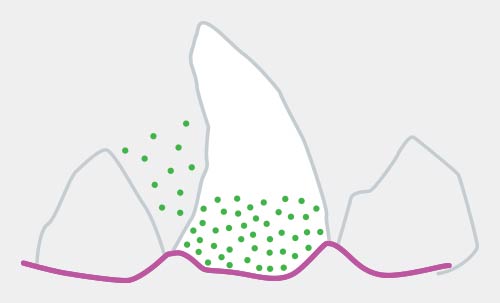
A pet’s saliva contains magnesium, calcium and iron
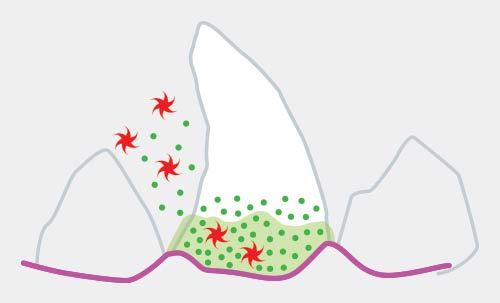
Bacteria produce a protective dome (biofilm) and create plaque
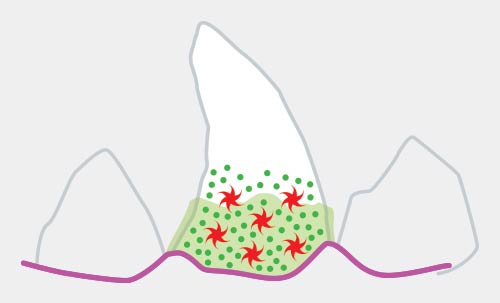
Salivary minerals combine with plaque and calcify into tartar (calculus)
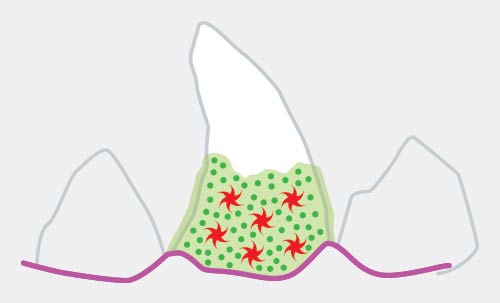
Over time, bacteria produces plaque in new places, including current tartar
How does VETRADENT® Biotrate® Technology work?
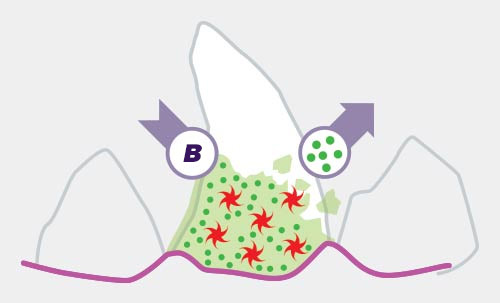
The binding agents attach to magnesium, calcium, and iron to wash them away.
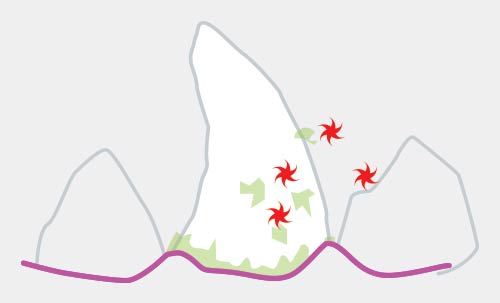
By binding the minerals in saliva, they aren’t available to calcify plaque into tartar. This chelation action may also soften existing tartar.
Demonstrated Efficacy1
OBJECTIVE:
The objective of the study was to evaluate the effectiveness of Vetradent® Water Additive on the reduction of dental plaque, calculus, gingivitis, and halitosis following administration via drinking water in Beagle dogs. This was a controlled, randomized, blinded study involving sixty (60), healthy, purpose-bred, Beagle dogs (30 dogs per group).
METHOD:
Seven days before the study began, all dogs had their teeth scaled and polished. On Day 0, baseline scores for halitosis, plaque, gingivitis, and halitosis were measured. Animals were then stratified into two groups based on Day 0 plaque scores. After dental scoring on Day 0, all dogs underwent another dental scaling and polishing procedure to ensure no plaque or calculus was present at the start of the study.
On Days 1-84, dogs assigned to Group 1 were fed the control diet (an AAFCO approved maintenance kibble, fed dry) and untreated water. Dogs assigned to Group 2 were fed the control diet and Vetradent Water Additive treated water. On Day 85, each animal received a plaque, calculus, and gingivitis evaluation.
Results
On Day 85, the dogs treated with Vetradent® Water Additive had a 25.4% reduction in tartar scores compared to the control group. This reduction was statistically significant (p ≤ 0.03).
CONCLUSION:
This study demonstrated that Vetradent® Water Additive was effective in reducing dental tartar in dogs.
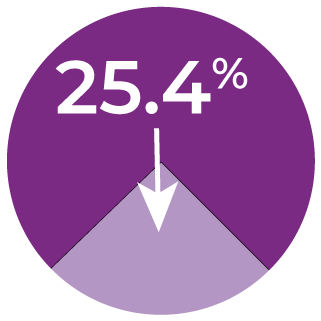
The tartar score for the Vetradent® treated dogs was 25.4% lower than the control group.
Demonstrated Safety2
The safety of Vetradent® Water Additive was evaluated in a controlled laboratory study involving 18 healthy, adult, beagle dogs. This 30-day study consisted of three treatment groups with six dogs each: one control group received untreated water, one group received water with the recommended amount of Vetradent® added (40 mL/1000 mL), and the final group received water with 5X the recommended amount of Vetradent® added.
Dogs were observed daily for food & water intake, general health, and fecal consistency. Bi-weekly body weight measurements were taken, and bloodwork was performed on Days 1, 14, and 29.
Apart from intermittent soft feces in 3 of 6 dogs in the 5X group, no observations noted were considered treatment related. Animals maintained or gained body weight throughout the study. Evaluation of bloodwork values did not reveal any group trends or individual effects considered related to treatment.
A similar study was performed in 18 cats. Vetradent® Water Additive was well tolerated in all but one cat in the 5X dose group; this cat drank very little of the daily water ration and was removed from the study. In two cats (1X and 5X dose), vomiting occurred. One cat in the 5X group had persistent soft/loose stool throughout the entire study period. Evaluation of bloodwork values did not show any clinically relevant abnormalities.
Conclusion
This study demonstrated the safety of Vetradent® Water Additive at the recommended dose for 30 consecutive days in adult dogs and cats
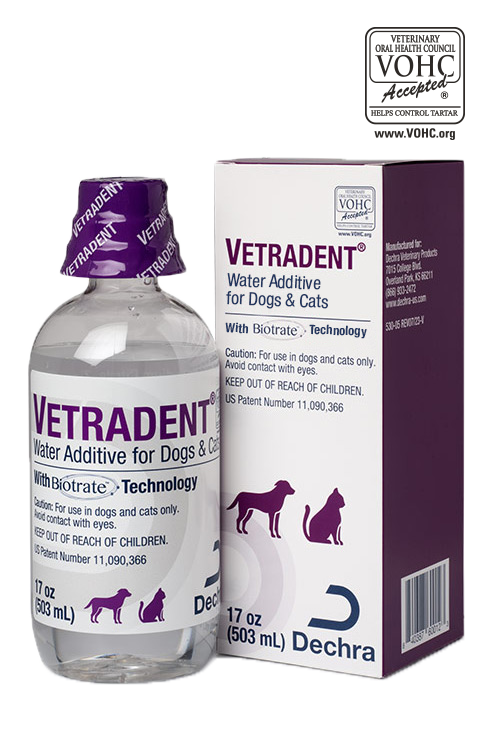
Demonstrated Efficacy1
The objective of the study was to evaluate the effectiveness of Vetradent® Dental Wipes on the reduction of dental plaque, calculus, gingivitis, and halitosis in Beagle dogs. This was a controlled, randomized study involving fifty (50), healthy, purpose-bred, Beagle dogs (25 dogs per group).
Seven days before the study began, all dogs had their teeth scaled and polished. On Day 0, baseline scores for halitosis, plaque, and gingivitis were measured. Animals were then stratified into two groups based on Day 0 plaque scores. After dental scoring on Day 0, all dogs underwent another dental scaling and polishing procedure to ensure no plaque or calculus was present at the start of the study.
On Days 1-27, dogs assigned to Group 1 were fed the control diet only (an AAFCO approved maintenance kibble, fed dry). Dogs assigned to Group 2 were fed the control diet and had an oral wipe (one per dog) rubbed on their teeth daily. On Day 28, each animal received a plaque, calculus, gingivitis, and halitosis evaluation.
Results
On Day 28, the dogs treated with Vetradent® Dental Wipes had a 59% reduction in tartar scores compared to the control group. This reduction was statistically significant (p ≤ 0.01). Gingivitis and plaque scores were reduced by at least 37 and 17% respectively. These reductions were also statistically significant (p ≤ 0.05 and p ≤ 0.01). Halitosis scores were reduced by 20% in dogs treated with Vetradent® Dental Wipes, however this reduction was not statistically significant.
Conclusion
This study demonstrated the effectiveness of Vetradent® Dental Wipes in reducing dental tartar in dogs.
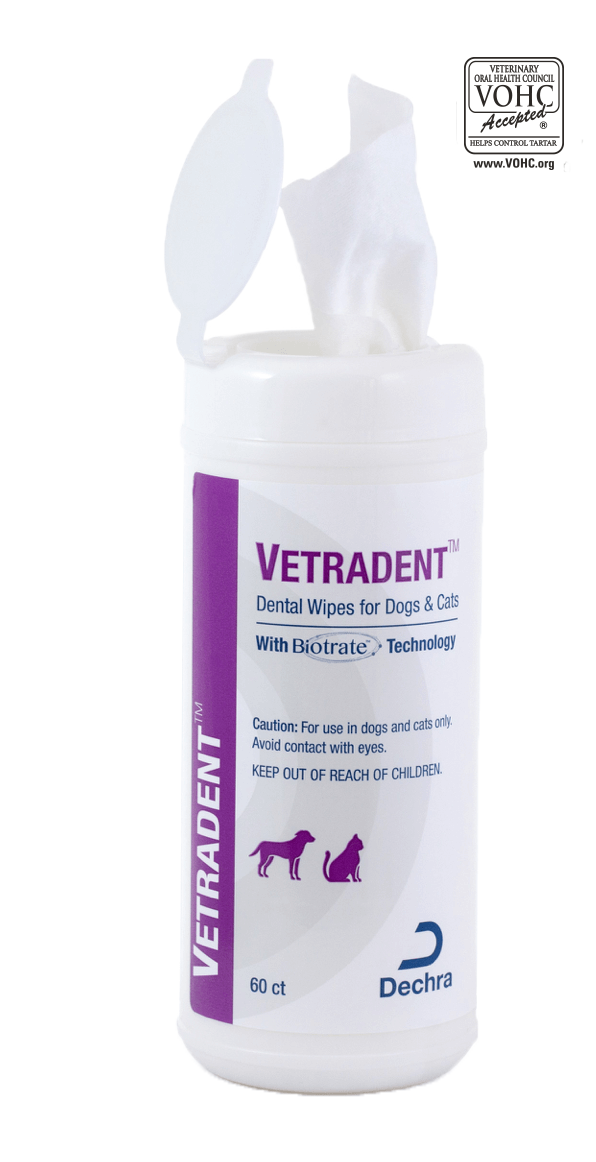
Ingredient Listing
Active Ingredients
Sodium Citrate – A chelating agent
Zinc Chloride – A mineral able to bind to volatile sulfur compounds which reduces bad breath
Citric Acid – pH buffer to ensure there is no change to the pH balance in the pets mouth
Also Contains
Potassium Benzoate
Disodium EDTA
1 A study meeting VOHC standards; study summary available on request
2 Third party laboratory GSP study; study summary available on request
Customer Service
support@dechra.com or call (866) 933 -2472